PushOwl • BFCM 2025

BFCM Hub

Designing guidance that fits your store size.

Merchants opened the app during BFCM and saw nothing. I designed a personalized hub system that knew where they were and what they needed next.

Behavioral Segmentation Personalization Research Loops Seasonal UX
BFCM personalized hub system design
Role
Senior Product Designer
Timeline
BFCM 2025
Key Outcome
+33pt Hub Open Rate & +30pt Trial Conversion

Time on page increased from 6s to 45s with personalized guidance.

Approach

How I designed the system

Built behavioral segmentation and continuous research loops to create personalized experiences for each merchant type.

Adaptive guidance system

Control the attention, delivery, and urgency

I rebuilt the BFCM surface as a living layer. One module pulled a store’s Shopify catalog to craft banners and templates, while another reordered tasks by revenue impact. The page breathed with the merchant’s maturity.

Watched PostHog, sales calls, and support logs daily to understand where merchants froze. Built decision rules that respond to store volume, notification maturity, and campaign history.

  • 6Cohorts mapped by order volume
  • 3Adaptive content rails per cohort
  • 4xLonger dwell time vs 2023

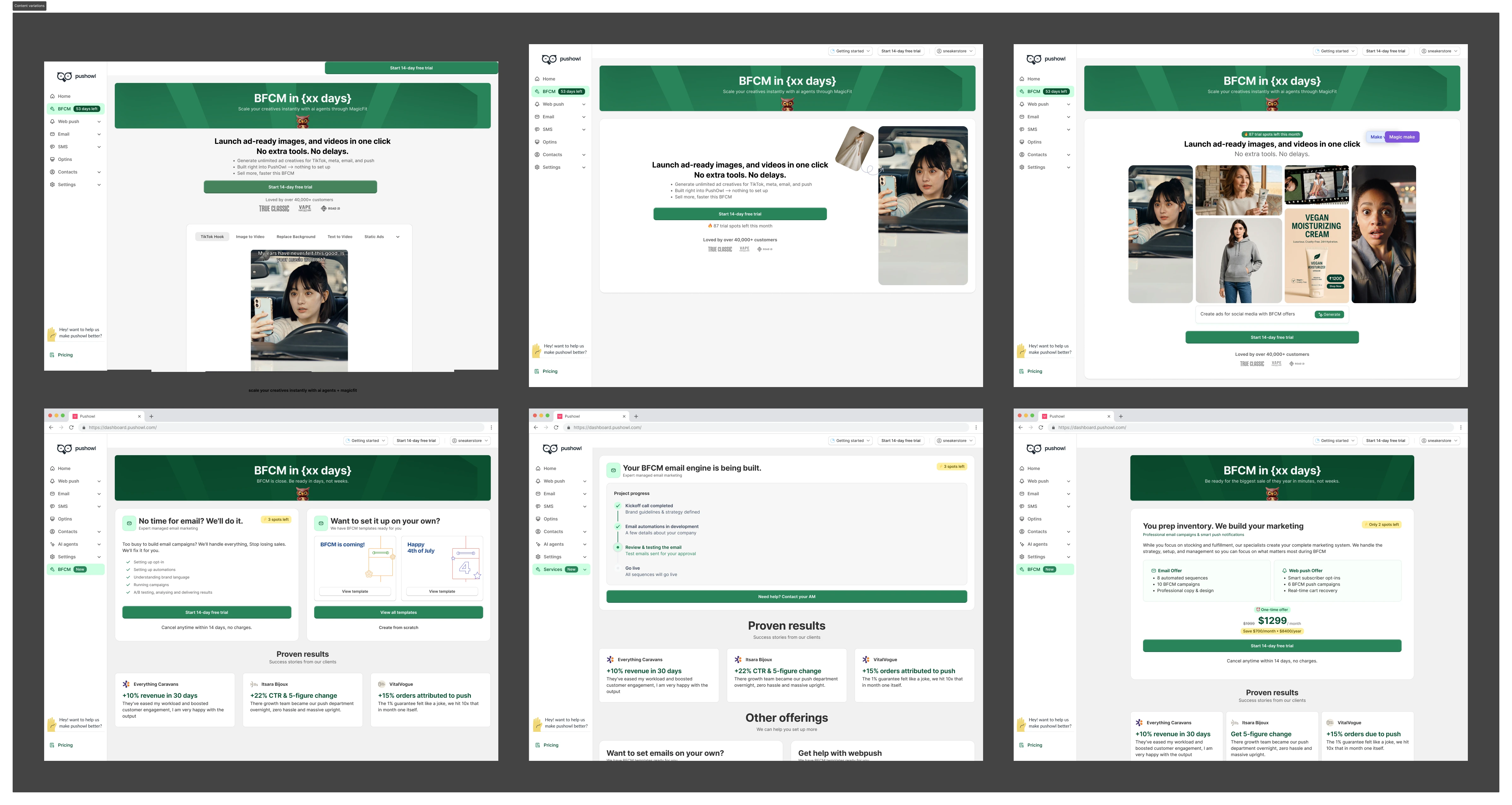
Personalized hub showing templates + inventory driven hero.
BFCM personalized hub system design
Research loops

Access the signals merchants already give

Every morning started with 5-6 replays and tickets tagged “BFCM.” I mapped where people hovered, retreated, or rage-clicked, then reworked copy + ordering the same day.

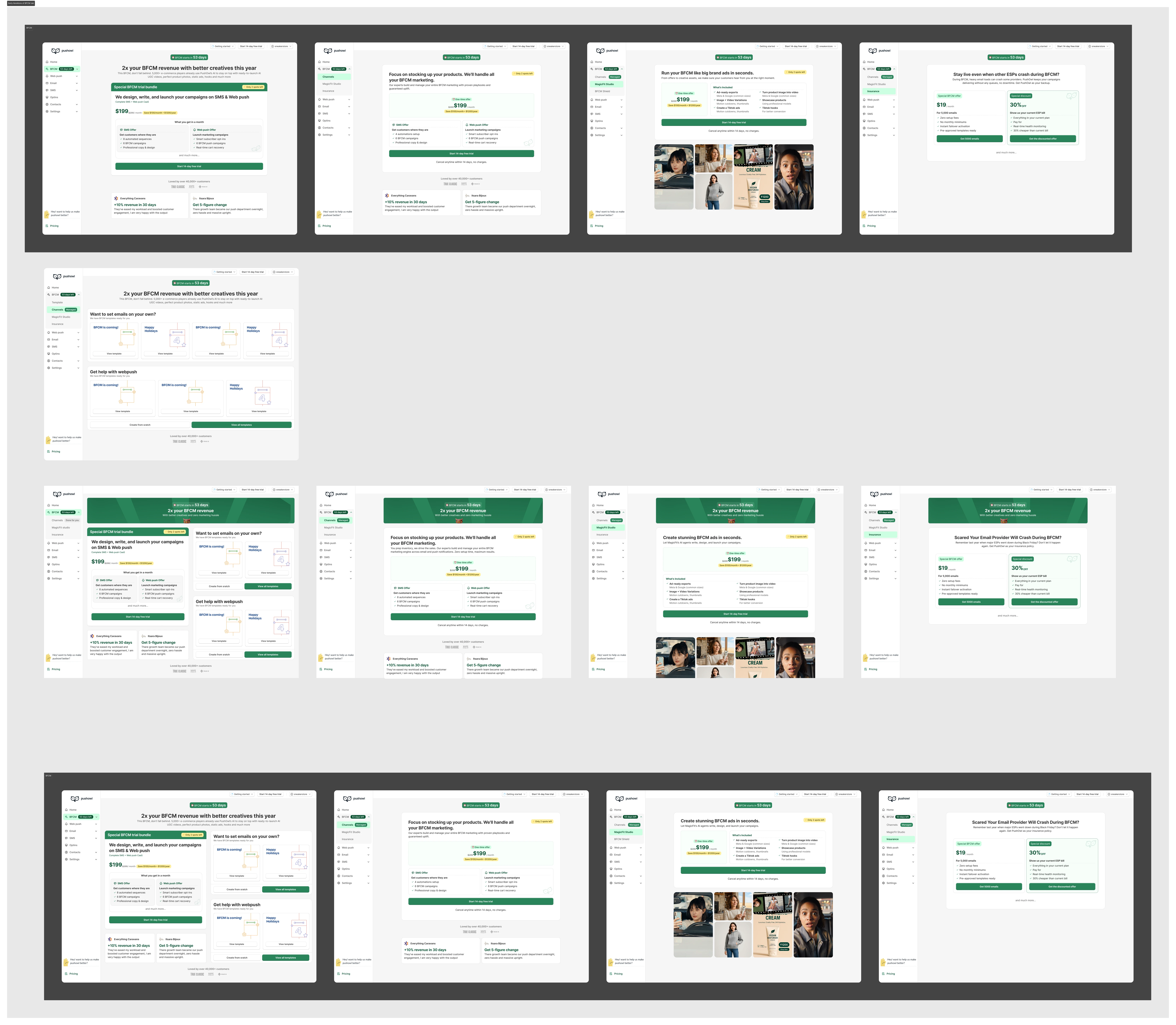
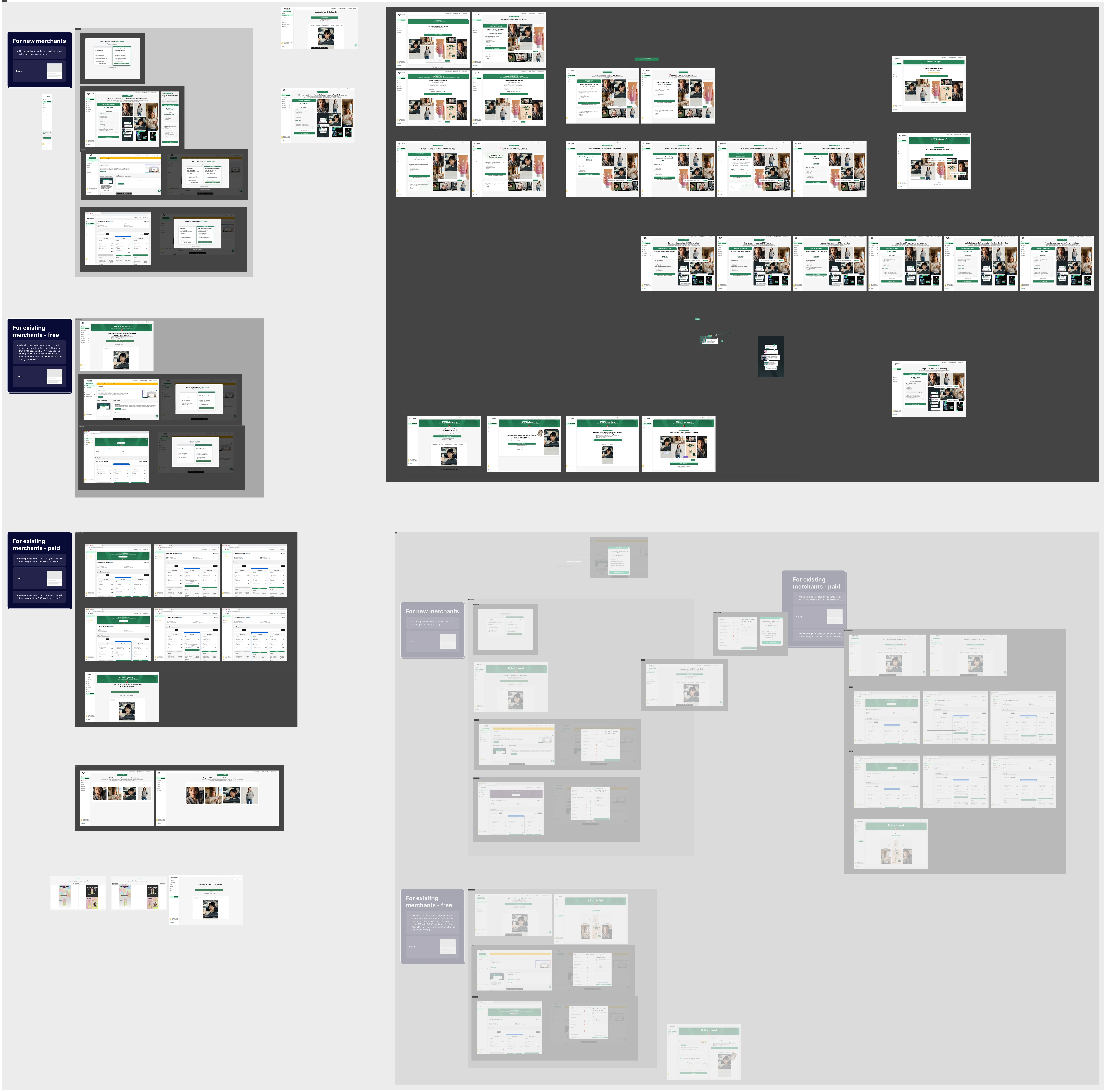
Early iterations that informed the BFCM adaptive interface
01

Shopify data fills hero anchors

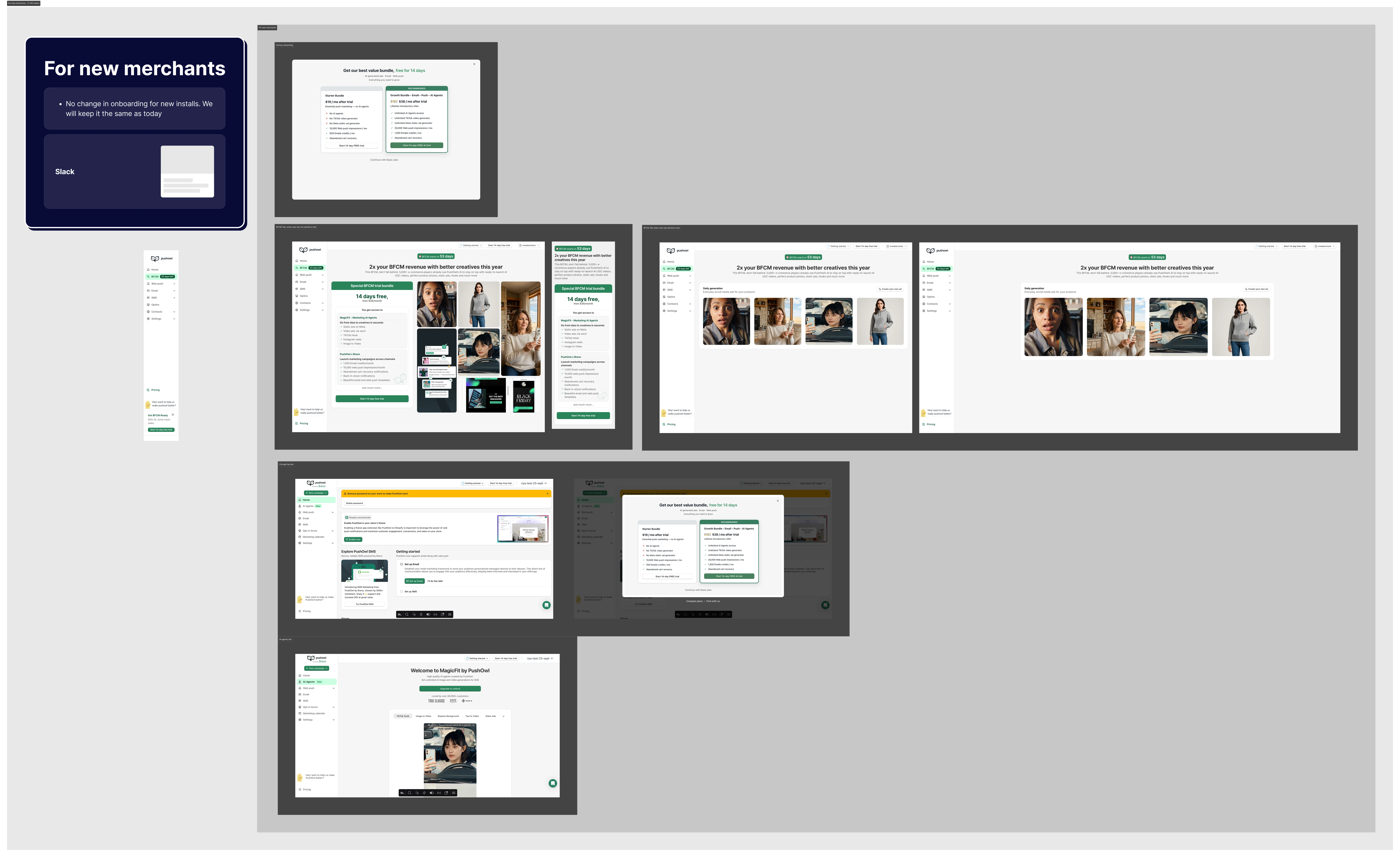
Automatically grabbed three best-selling products and built the hero creative so merchants instantly saw their store inside the experience.

Personalized BFCM hero for new merchants
02

Playbooks tuned to small stores

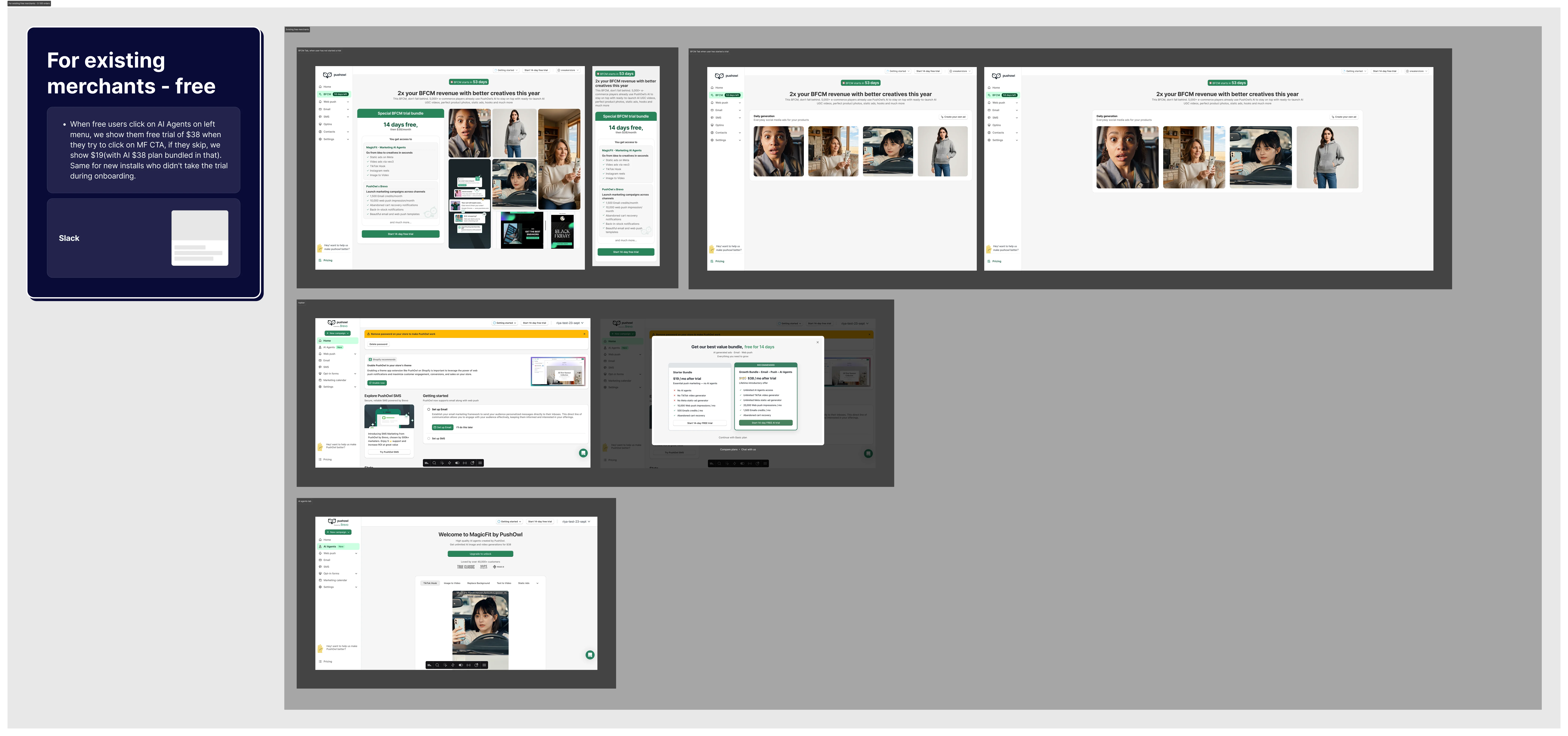
Storefronts with 0-100 orders received guided walkthroughs, progress trackers, and default templates so they never faced blank states.

Guided experience for free merchants
03

Ops signals for paying merchants

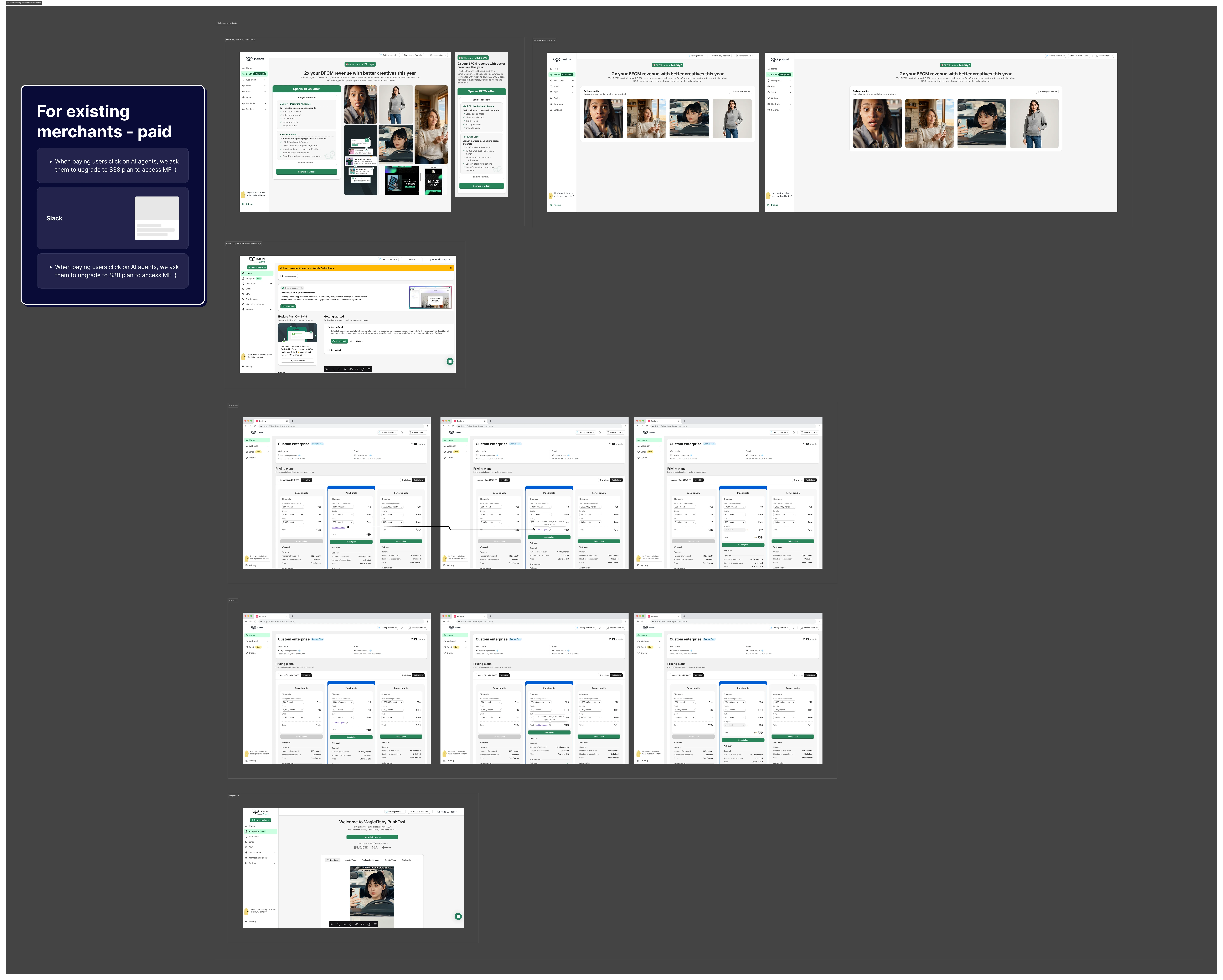
Merchants paying for automation saw reliability metrics, launch checklists, and shortcuts into the campaigns proven to drive trial-to-paid lift.

BFCM experience for paying merchants
01 — Problem

Same UI for everyone = nobody felt served

For 6-7 years, product stayed flat during BFCM while sales drove 1.5x revenue. Merchants logged in and saw the same UI as July.

The core issue: A 20-order store saw the same experience as a 20,000-order store. Same offer. Same copy. Same "figure it out yourself" UI. One needed hand-holding. The other needed automation at scale. We gave both nothing.

The stakes: BFCM drives 40% of annual revenue for many merchants. Every abandoned setup was lost revenue at the worst possible time. Meanwhile, competitors shipped personalized BFCM playbooks while we shipped… nothing new.

What merchants told us

This is my first Black Friday with a Shopify store. I have no idea what campaigns to send or when.

E
Emily Rodriguez
New merchant, 15 orders

I need to send 20+ campaigns during BFCM, but PushOwl doesn't show me what's working for stores my size.

D
David Kim
Paying merchant, 5k orders

I logged in on Nov 15 and the app looked exactly the same as June. Where's the BFCM guidance?

S
Sarah Chen
Support ticket

Metrics that failed

BFCM hub visits (YoY) Flat
Trial starts (0–100 orders) 5–7s drop-off
Product-led revenue 0%
Support tickets during BFCM 3× spike
02 — Early explorations

Finding the right approach

Early-iterations-of-BFCM-tab showing different design variations

Explored tab vs banner vs full-page takeover. Users preferred a dedicated space (tab) over interruptions.

Three different content approaches tested

Version A: Offers-only. Version B: Social proof heavy. Version C: Templates + guidance (what we shipped). Merchants wanted "what to do" not "what to buy."

03 — Segmentation

Six behavioral cohorts

Each cohort got distinct experiences: different headlines, CTAs, content length, and trust signals based on order volume and BFCM history.

Cohort Order volume User need Design response
0–100 orders Small stores "Just tell me what to do" Single CTA, simple copy, 7-day trial, reduced complexity
100–1k orders Growing stores "Show me what works" Top 3 templates, performance badges, 14-day trial
1k–2k orders Mid-size stores "Give me ideas to try" Top 10 playbooks, side-by-side comparisons, urgency messaging
2k–10k orders Large stores "Help me optimize" Performance dashboard, A/B test suggestions, revenue calculator
10k–50k orders Very large stores "I need reliability at scale" Volume capacity indicators, automation-first layout, priority support
50k+ orders Enterprise "Prove it won't break" Uptime stats, SLA badges, testing environment, account manager contact
04 — Design variations

How the hub adapted for different merchants

BFCM hub for new merchants with 0-100 orders

🌱 New merchants (0–100 orders): "Get your first big sale this BFCM" — Step-by-step guidance with high reassurance, single recommended action at top, 1-click templates.

BFCM hub for existing free merchants

🔄 Existing free merchants: Past performance + upgrade nudge. Reminder of what worked last time with quick wins and checklists.

BFCM hub for paying merchants

⭐ Paying merchants: Advanced features visible, optimization strategies, automation section prominent. "Maximize your BFCM revenue."

05 — Impact & outcomes

Before → After

Behavior funnel changes

BFCM hub open rate 35% → 68%
Trial start rate 12% → 42%
Time on page (Cohort 1) 6s → 45s
Product revenue contribution ~0% → Meaningful

First time in 6-7 years that product contributed meaningfully to BFCM revenue. The segmented approach turned a flat BFCM into a product-led growth lever. Beginners felt supported, veterans got depth, enterprise accounts received direct sales follow-up.

Performance under load

Total hub visits 1.2M
Avg load time (95th percentile) 840ms
Uptime during peak weekend 99.97%
Reflections

What I learned designing for 6 cohorts

"Segmentation isn't about showing different UI—it's about solving different problems at different speeds."

Core lessons

  • Behavioral segmentation beats demographic: I initially segmented by order volume alone. That failed. A 500-order store that's never sent a campaign needs more help than a 50-order store that sends weekly. Switching to behavioral cohorts (campaign history + order volume) lifted trial starts by 30%.
  • Research loops must run daily during peak: Watching 5-6 session replays every morning revealed micro-patterns I'd never catch in monthly reviews. A 2-second hover on "What templates work best?" led to the personalized template rail that became the highest-clicked element.
  • Personalization isn't always more work: The Shopify API auto-filled hero images with each merchant's top products. Zero extra engineering. This one change made 85% of merchants say "This feels made for me" in surveys.
  • Seasonal products are experiments with hard deadlines: I had 6 weeks to ship. Not every hypothesis could be tested. I prioritized features that had to work (cohort routing) over nice-to-haves (dynamic copy). The system shipped imperfect but functional.

The insight that mattered most:

Flat years during peak season aren't about lacking features—they're about lacking focus. We had plenty of campaigns merchants could run. What we lacked was showing each merchant which campaigns mattered for their situation. Segmentation gave us that focus.